Category: Feature

  • The Impact of 5G on SmartShape’s Features

    The Impact of 5G on SmartShape’s Features

    The era of ultra-fast connectivity has arrived with 5G, and its promises in terms of speed, reduced latency, and massive connectivity are redefining technological standards across many industries. In this context, SmartShape—an innovative digital twin platform—stands at the crossroads of digital transformation and industrial performance requirements. This article explores how integrating 5G can significantly enhance SmartShape’s features, providing concrete benefits to the industries adopting this technology.

    5G1

    I. Understanding 5G and Digital Twins

    A. What is 5G?

    5G represents the fifth generation of mobile networks, designed to meet the growing demands for speed and connectivity in an increasingly connected world. It offers speeds that can reach several gigabits per second, very low latency, and the capacity to connect millions of devices simultaneously. These features clearly distinguish it from previous generations, paving the way for new applications in areas as diverse as augmented reality, the Internet of Things (IoT), and critical communication systems.

    B. Digital Twins and SmartShape

    Digital twins are virtual replicas of objects, processes, or even entire systems that enable simulation, monitoring, and optimization of complex environments. SmartShape positions itself as a connected, collaborative, and programmable digital twin solution, designed to centralize and visualize complex industrial data in an intuitive way. With an interface accessible on various devices—from web browsers to tablets—SmartShape facilitates decision-making by offering real-time 3D representations of physical systems. The platform stands out for its compatibility with a wide range of CAD software and its ability to integrate data from diverse sources such as sensors, ERP systems, and other business applications.

    II. The Benefits of 5G for SmartShape

    Integrating 5G with SmartShape presents several key advantages that not only enhance the platform’s technical performance but also improve the quality of services provided to its users.

    A. Reduced Latency

    The low latency offered by 5G is essential for applications requiring real-time interactions. In the case of SmartShape, this means that updates to digital models and sensor data occur almost instantaneously. Minimal latency enables more precise synchronization between the digital twin and the physical system, ensuring timely monitoring and intervention. This increased responsiveness is particularly crucial in sectors such as predictive maintenance or emergency management.

    B. Increased Bandwidth

    With 5G, the data transmission capacity is significantly enhanced. This boost in bandwidth allows SmartShape to process and transmit large volumes of data, even during complex simulations or when streaming 3D models. The result is a notable improvement in simulation quality and reduced rendering times, leading to a better user experience and optimized decision-making processes.

    C. Massive Device Connectivity

    5G facilitates the simultaneous connection of numerous devices, sensors, and IoT objects. For SmartShape, this means a richer and more diverse collection of real-time data. Integrating data from thousands of sensors on industrial infrastructures enables the creation of increasingly accurate and up-to-date digital twins. This massive connectivity also allows the platform to extend its functionalities to complex IoT systems, thereby enhancing overall industrial process efficiency.

    5G3

    III. Practical Applications of Integrating 5G with SmartShape

    The combination of 5G and SmartShape opens up a wide array of practical applications that are revolutionizing the management of infrastructures and industrial processes.

    A. Enhanced Predictive Maintenance

    Thanks to rapid, real-time data transmission via 5G, companies can implement more effective predictive maintenance systems. The ability to continuously monitor equipment conditions allows for anticipating failures before they occur, thus reducing downtime and associated repair costs. For example, in a plant equipped with SmartShape, sensors might detect slight variations in temperature or vibration, signaling the need for preventive maintenance.

    B. Optimization of Production Processes

    The increased bandwidth and reduced latency provided by 5G enable real-time monitoring of production lines. Operators can receive instant updates on the status of industrial processes, allowing for rapid adjustments to maintain optimal production levels. This responsiveness not only boosts productivity but also reduces waste and improves the quality of finished products.

    C. Advanced Training and Simulation

    The integration of 5G also makes it possible to leverage immersive technologies such as augmented and virtual reality. SmartShape can thus offer advanced training and simulation environments where operators and technicians train in highly realistic virtual replicas. These training tools reduce the risks associated with handling real equipment while lowering costs and training time. Real-time simulations provide an interactive experience that significantly enhances learning curves.

    IV. Challenges and Future Perspectives

    A. Technical Challenges

    While the benefits of integrating 5G with SmartShape are undeniable, several technical challenges remain. First, a robust and widely deployed 5G infrastructure is necessary to fully exploit these advantages. Additionally, the security of data transmitted over 5G networks is a major concern. Companies must implement encryption protocols and cybersecurity measures to protect sensitive information exchanged over these networks.

    B. Future Perspectives

    The rapid evolution of 5G opens up new prospects for SmartShape. As 5G becomes more widespread, one can expect even deeper integration of the platform with other cutting-edge technologies such as artificial intelligence and IoT. These synergies will enable the creation of even more powerful solutions, tailored to diverse industrial sectors like aerospace, energy, or water treatment. Furthermore, the rise of 5G could also foster the emergence of innovative applications, fundamentally transforming how companies manage their infrastructures and operational processes.

    Conclusion

    The integration of 5G with SmartShape represents a significant leap forward in the digital industrial landscape. By reducing latency, increasing bandwidth, and enabling massive device connectivity, 5G empowers SmartShape to deliver ever more accurate and responsive digital twins. This technological synergy not only enhances predictive maintenance and production process optimization but also revolutionizes training and simulation through immersive augmented and virtual reality environments.

    While technical challenges such as infrastructure requirements and data security need to be addressed, the prospects offered by 5G are highly promising. Companies that adopt these technologies together will benefit from greater responsiveness, reduced operational costs, and an enhanced capacity to innovate in an increasingly competitive market.

    In conclusion, the impact of 5G on SmartShape’s features is not merely a technical improvement; it serves as a true lever for digital transformation in the industry. It invites businesses to rethink their approach to infrastructure management and embrace the opportunities provided by ultra-fast connectivity to remain competitive in a rapidly evolving market.

  • The Future of Industry: When AI and Digital Twins Work Together

    The Future of Industry: When AI and Digital Twins Work Together


    The Future of Industry: When AI and Digital Twins Work Together

    In a world where technological innovation is reshaping the boundaries of industry, artificial intelligence (AI) and digital twins are emerging as indispensable catalysts. These two technologies, though still relatively recent, already demonstrate robust potential to transform industrial processes, optimize performance, and reduce costs.

    At SmartShape, we have identified the unique potential of AI and digital twins to address the complex challenges faced by modern industries. But how can these two technologies work together to redefine the future of industry? This article explores their synergy and the transformations it enables.

    Understanding Digital Twins and AI

    A digital twin is a dynamic virtual replica of a physical object, system, or process. By integrating real-world data from sensors, CAD tools, or information systems, it enables real-time monitoring, analysis, and optimization of performance. At SmartShape, our digital twins incorporate advanced technologies such as photogrammetry, BIM, and 3D streaming to offer precise and accessible representations of complex data.

    AI, on the other hand, leverages advanced algorithms to process massive volumes of data, identify patterns, and predict future events. Whether through machine learning or deep learning, AI improves decision-making processes and creates smarter, adaptive systems.

    Together, these technologies form a powerful symbiosis. Digital twins provide a data-rich platform, while AI transforms this data into actionable insights. This synergy not only enhances understanding of the present but also anticipates future outcomes.

    Key Applications of AI in Digital Twins

    1. Predictive Maintenance

    Predictive maintenance is one of the most transformed domains by the integration of AI and digital twins. By analyzing real-time data from sensors and combining it with predictive models, it becomes possible to anticipate failures before they occur. For example, in the energy sector, wind turbines equipped with AI-powered digital twins can detect subtle changes in blade vibrations, signaling imminent risks of failure.

    At SmartShape, this capability is already implemented with partners like Suez, where the management of complex infrastructures such as sewer networks is optimized to reduce costs, extend equipment lifespan, and anticipate maintenance needs.

    2. Process Optimization

    AI, combined with a digital twin, enables the analysis of complex scenarios and the proposal of improvements to industrial processes. For instance, in manufacturing, a digital twin can simulate different production chain configurations. AI evaluates these scenarios and identifies options that minimize costs and delays while maximizing quality.

    Taking it a step further, this technology can adapt processes in real time to unforeseen events. For example, in chemical industries, AI can monitor temperature or pressure variations and automatically adjust parameters to ensure product safety and quality.

    3. Decision Support

    AI-enhanced digital twins offer invaluable decision support. By integrating historical data and predicting future trends, they allow decision-makers to evaluate risks and opportunities. For example, in the naval sector, SmartShape collaborated with Chantiers de l’Atlantique to optimize shipbuilding processes. The platform provides real-time recommendations, reducing delays, cost overruns, and increasing operational precision.

    AI-driven solutions can also uncover unexpected improvement opportunities by revealing correlations between previously isolated datasets.

    Benefits for Industries

    1. Cost Reduction

    Integrating AI and digital twins helps reduce costs by identifying inefficiencies early and avoiding unexpected failures. This results in better resource management and significant savings on maintenance and downtime.

    2. Enhanced Safety

    By predicting failures and monitoring performance in real time, these technologies contribute to a safer working environment. Workers face fewer hazardous situations, and critical systems can be continuously monitored to prevent accidents.

    3. Productivity Gains

    Businesses can automate complex tasks and optimize performance, leading to significant productivity gains. These gains enable teams to focus on higher-value activities.

    4. Improved Collaboration

    Digital twins provide a “single source of truth,” facilitating collaboration between teams and stakeholders. Centralized data ensures clear and effective communication, reducing errors and misunderstandings.

    The Future: AI and Digital Twins at Scale

    The combined potential of AI and digital twins is only beginning to unfold. With advancements in sensor technologies, improved AI algorithms, and the rise of cloud infrastructures, the possibilities are limitless. Digital twins could evolve into interconnected ecosystems, optimizing cities, energy networks, and global supply chains.

    At SmartShape, we continue to invest in these innovations to guide our clients toward a more efficient, secure, and sustainable future. The future of industry is being shaped today, and it is clear that AI and digital twins are its cornerstones.

    Together, we are building the foundations of an industrial world revolutionized by technology. Are you ready to join this transformation? Contact us to discover how SmartShape can bring your industrial projects to life.

  • Digital Twins and Predictive Maintenance: A Game-Changer for Industry 4.0

    Digital Twins and Predictive Maintenance: A Game-Changer for Industry 4.0

    As Industry 4.0 continues to revolutionize industrial practices, the integration of digital twins and artificial intelligence (AI) is redefining asset management. These technologies enable efficient, proactive, and cost-effective predictive maintenance. This article explores how digital twins are transforming maintenance strategies, reducing costs, and optimizing equipment performance.

    What is a Digital Twin?

    A digital twin is a virtual replica of a physical object, process, or system that can simulate and analyze its behavior in real time. By collecting and centralizing data from various sources, such as IoT sensors, management software, or business databases, digital twins provide comprehensive insights into industrial assets.

    This dynamic representation enables companies to monitor performance and anticipate issues before they arise, paving the way for predictive maintenance.

    Predictive Maintenance: A New Approach

    Unlike preventive maintenance, which relies on fixed time intervals for interventions, predictive maintenance uses real-time data to determine the optimal moment for action. This ensures that parts are replaced or adjustments are made only when necessary, reducing costs and waste.

    Benefits of predictive maintenance include:

    • Reduced unplanned downtime.
    • Optimized use of resources and spare parts.
    • Extended equipment lifespan.
    • Improved operational safety.


    Predictive Maintenance3

    The Integration of Digital Twins and Artificial Intelligence

    The combination of digital twins and AI elevates predictive maintenance to a new level of efficiency. Here’s how it works:

    • Data Collection: Connected sensors continuously monitor machine performance, capturing critical data such as vibrations, temperature, or pressure.
    • Data Analysis: AI algorithms identify patterns and detect potential anomalies through machine learning.
    • Accurate Predictions: Digital twins simulate the future state of the equipment, predicting failures with precision.
    • Proactive Actions: Maintenance teams can plan targeted interventions before issues occur, minimizing disruptions and associated costs.

    Real-World Applications

    1. Aerospace Industry

    In aviation, digital twins monitor aircraft engines in real time. By analyzing subtle anomalies, they detect potential failures long before they escalate into major issues. This significantly reduces maintenance costs and aircraft downtime.

    2. Manufacturing Sector

    Production lines utilize digital twins to track the health of critical machinery. Early detection of wear or overheating enables swift action, avoiding costly production halts.

    3. Energy Infrastructure Management

    Energy networks and gas pipelines leverage digital twins to monitor critical infrastructure and optimize energy distribution. Targeted interventions maximize uptime and reliability.

    Challenges of Implementation

    Despite its many advantages, integrating predictive maintenance with digital twins and AI comes with challenges:

    1. Data Management: The volume and complexity of collected data require robust and scalable IT infrastructure.
    2. Initial Costs: Setting up sensors, specialized software, and collaborative platforms involves significant investment.
    3. Cybersecurity: Increased interconnectivity exposes systems to potential vulnerabilities, necessitating strict data protection protocols.
    4. Skills Gap: Leveraging digital twins and analyzing data effectively require teams trained in advanced technologies.


    Predictive Maintenance2

    Future Perspectives

    The potential of digital twins and AI in predictive maintenance is vast. Looking ahead, these technologies are expected to integrate:

    • Internet of Things (IoT): Enabling real-time data collection from an increasing number of connected devices.
    • Machine Learning: Enhancing prediction accuracy and optimizing asset performance.
    • Augmented Reality (AR): Assisting technicians by visualizing anomalies detected by the digital twin and providing guided repair instructions.

    These innovations will continue to transform industrial practices, helping companies improve efficiency, profitability, and resilience in the face of evolving challenges.

    Conclusion

    The integration of digital twins and artificial intelligence marks a pivotal moment in the evolution of predictive maintenance. These technologies enable businesses to transition from reactive approaches to proactive strategies, fundamentally revolutionizing asset management.

    By reducing downtime, optimizing resources, and enhancing safety, digital twins are becoming indispensable pillars of Industry 4.0. As these tools advance, their adoption will expand, unlocking new opportunities for operational optimization and long-term competitiveness.

    With tangible results and real-world examples, it is clear that this transformation is more than just a trend—it is a necessity for staying competitive in a rapidly evolving industrial landscape.

  • The Offline Capabilities of SmartShape: Ensuring Continuity in Remote Areas

    The Offline Capabilities of SmartShape: Ensuring Continuity in Remote Areas

    In the modern industrial world, connectivity and real-time access to data have become essential elements for effective project and infrastructure management. However, not all regions benefit from stable internet connections or permanent access to data networks. This is where SmartShape’s offline capabilities come into play, offering a robust solution to ensure operational continuity even in the most remote areas. This article explores how SmartShape overcomes connectivity challenges and ensures smooth and efficient industrial project management.

    pixelcut-export

    Connectivity Challenges in Remote Areas

    Remote areas, whether they are distant construction sites, offshore installations, or infrastructures located in rural regions, present unique challenges in terms of connectivity. These challenges include:

    1. Lack of Data Networks: Many remote areas lack adequate network infrastructure, making real-time access to data difficult or even impossible.
    2. Harsh Environmental Conditions: Extreme environmental conditions, such as storms or extreme temperatures, can disrupt existing network connections.
    3. High Connection Costs: Establishing a stable network connection in remote areas can be extremely costly.
    4. Data Security: Unsecured or unstable networks can expose sensitive data to security risks.

    SmartShape: An Innovative Offline Solution

    SmartShape is designed to address these challenges through its advanced offline capabilities. Here’s how this technology ensures operational continuity in remote areas.

    1. Data Storage and Synchronization

    SmartShape allows critical data to be stored locally on devices used in the field. Whether it’s 3D plans, sensor data, or maintenance information, all necessary data is available offline. When the network connection is restored, SmartShape automatically synchronizes local data with the central server, ensuring that all information is up-to-date and accessible to all stakeholders.

    2. Real-Time Collaboration, Even Offline

    Collaboration is essential for industrial project management, and SmartShape maintains this collaboration even without an internet connection. Teams can work together on the same 3D models, add annotations, and share critical information. Once reconnected, all changes are synchronized, ensuring continuity and data consistency.

    3. Universal Accessibility

    SmartShape’s offline capabilities are available on a wide range of devices, including tablets and laptops. This universal accessibility enables field teams to work efficiently, regardless of environmental conditions. Additionally, SmartShape’s intuitive user interface ensures quick and easy adoption by all users, even those with little experience with digital technologies.

    4. Enhanced Data Security

    Data security is a priority for SmartShape. Locally stored data is encrypted, ensuring its protection even in the event of device loss or theft. Moreover, secure synchronization protocols ensure that data transferred to the central server is protected against interception or alteration.

    5. Case Study: Chantier de l’Atlantique

    A concrete example of the effectiveness of SmartShape’s offline capabilities is the project conducted with Chantier de l’Atlantique. Located in a region where connectivity can be limited, the shipyard benefited from SmartShape’s offline features to manage the construction of over 10 ships, comprising 3 million unique elements and 400 million attributes.

    • Data Management: 3D plans and critical data were available offline, allowing field teams to continue working even without internet access.
    • Improved Collaboration: Teams were able to collaborate in real-time, add annotations, and share essential information, ensuring continuity and data consistency.
    • Security: Data was secured through local encryption and secure synchronization protocols, guaranteeing the protection of sensitive information.

    Connectivité

    Advantages of SmartShape for Remote Areas

    SmartShape’s offline capabilities offer numerous advantages for industrial operations in remote areas:

    • Operational Continuity: Teams can continue working without interruption, even in the absence of a network connection.
    • Cost Reduction: Avoiding the high costs associated with establishing network connections in remote areas allows for significant savings.
    • Increased Productivity: Constant access to data and the ability to collaborate in real-time enhance team efficiency and productivity.
    • Data Security: Data is protected through advanced security protocols, reducing the risk of loss or compromise.

    Conclusion

    In a world where connectivity is often taken for granted, SmartShape’s offline capabilities stand out by offering a robust solution for industrial operations in remote areas. By enabling data storage and synchronization, real-time collaboration, universal accessibility, and enhanced security, SmartShape ensures operational continuity and improves field team efficiency.

    Concrete examples, such as the project with Chantier de l’Atlantique, demonstrate the significant impact of this technology on managing projects in challenging environments. By adopting SmartShape, companies can not only overcome connectivity challenges but also optimize their operations and proactively and effectively prepare for future challenges.

  • Introducing SmartShape’s New Feature: Snap & Go

    Introducing SmartShape’s New Feature: Snap & Go

    In our relentless pursuit of innovation and enhancing the capabilities of SmartShape, we are thrilled to introduce our latest feature – Snap & Go. This cutting-edge addition to our Digital Twin platform is designed to revolutionize the way you interact with and share your smart Digital Twins.

    What is Snap & Go?

    SmartShape, as a connected, programmable, and collaborative Digital Twin platform, has always aimed to simplify complex industrial data and enhance visual interpretation. With Snap & Go, we take a giant leap towards making your Digital Twins more accessible, shareable, and portable.

    How does Snap & Go work?

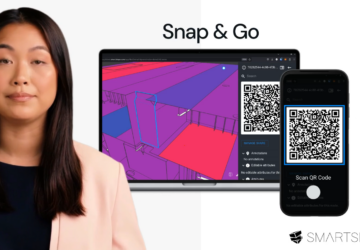
    Using Snap & Go is as simple as it sounds. Open the SmartShape app on your laptop, select the model, object, or annotation you want to share, and scan the QR code with your tablet or smartphone. In an instant, your smart Digital Twin becomes pocket-sized, ready to accompany you wherever you go.

    Key Benefits of Snap & Go:

    1. Efficient Maintenance Execution: Prepare maintenance tasks on your computer and execute them on-site using a mobile device. This feature streamlines the workflow, making tasks more efficient and convenient.
    2. Seamless Collaboration: Instantly share Digital Twins with your coworkers, promoting seamless collaboration and information sharing within your team.
    3. Real-time Adaptability: Add and update annotations in the office during surveys, enhancing the flexibility and real-time adaptability of your work.
    4. Quick Access to Physical Components: Scan a QR code on a physical part to easily access its Digital Twin. This provides quick and direct access to relevant information about the physical component, streamlining your workflow.

    How Snap & Go Enhances Your Work:

    SmartShape’s Snap & Go feature opens up new possibilities for industrial applications:

    • On-Site Maintenance: Efficiently execute tasks on-site using mobile devices.
    • Collaboration: Instantly share Digital Twins, fostering seamless collaboration.
    • Real-time Adaptability: Update annotations in real-time during surveys for flexible workflows.
    • Quick Access: Easily access Digital Twins by scanning QR codes on physical components.

    Snap & Go is a game-changer, extending the power of SmartShape’s Digital Twins to your pocket. It not only enhances the efficiency of maintenance tasks but also promotes seamless collaboration and real-time adaptability. As we continue to push the boundaries of industrial innovation, SmartShape remains committed to providing solutions that simplify complexity and empower industries to thrive in the digital age.

    Experience the future of Digital Twins with Snap & Go – where collaboration meets portability, and data becomes truly accessible. SmartShape, shaping the future of industry 4.0.