Category: Expertise

  • What is SmartShape?

    What is SmartShape?

    SmartShape is an innovative digital twin solution that allows for the design, manufacture, and maintenance of industrial projects in a more efficient and collaborative way. This cutting-edge technology was designed to help businesses improve their productivity and profitability through real-time visualization tools and live monitoring. In this article, we will explore the key features of SmartShape, the benefits it offers to businesses, and the industry sectors in which it can be used.
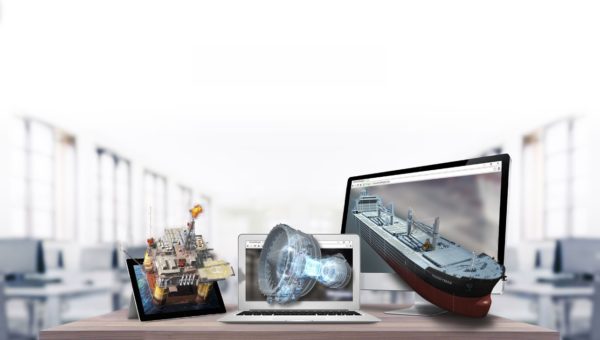
    IMG SmartShape to WB

    Key features of SmartShape

    • Decision support tool

    SmartShape is a tool that puts the human at the center of the approach. By enhancing and evolving skills, SmartShape allows for increased productivity while respecting everyone’s competencies.

    • Real-time Collaboration:

    SmartShape is also a collaborative tool that enables fluid and efficient team working. Team members can easily share information and collaborate on a project in real-time. SmartShape also allows for tracking a project’s progress over time and adapting to changes in an agile manner.

    • Live Monitoring:

    SmartShape is capable of providing accurate information in real-time due to its live monitoring features. This function is particularly useful in large-scale projects that require constant supervision to avoid delays and mistakes.

    • Adaptability:

    SmartShape is also a scalable solution that can be tailored to different industry sectors. This technology can be used in manufacturing, energy, transportation, health, and many other sectors.

    The benefits of SmartShape for businesses

    • Enhancing Productivity and Efficiency

    By using SmartShape, businesses can save time by avoiding re-shaping and construction errors. SmartShape also allows for a more efficient and seamless collaboration between the different stakeholders in the project, thus enhancing communication and decision-making.

    • Cost and Time Reduction

    SmartShape enables the reduction of construction costs and timelines by providing a comprehensive and accurate view of the project. This allows businesses to better plan their budget and schedule, thereby reducing financial risks and delays.

    • Improving Product Quality

    SmartShape offers several features that help improve product quality. Firstly, through its real-time collaboration, teams can work together to ensure that all tasks are accomplished correctly. Moreover, with live monitoring, teams can oversee the production process and intervene in real-time if necessary. Lastly, SmartShape’s adaptability enables easy adjustments to changes in the production process, ensuring product quality.

    • Boosting Competitiveness with SmartShape

    SmartShape allows businesses to enhance their competitiveness by improving their productivity and efficiency. By using SmartShape, businesses can reduce production costs and timelines, allowing them to be more competitive in the market. Additionally, enhancing product quality with SmartShape can help businesses stand out from their competitors.

    • Speeding up Decision-making with SmartShape

    SmartShape speeds up decision-making by providing real-time information on the production process. Thanks to SmartShape’s decision-support tool, teams can make decisions faster and more effectively. Additionally, SmartShape’s real-time collaboration allows teams to work together and make real-time decisions.

    • Effective Resource Management with SmartShape

    SmartShape allows for effective resource management by providing real-time information on the production process. Teams can monitor the production process and intervene in real-time if necessary, optimizing resource utilization. Moreover, SmartShape’s real-time collaboration allows teams to work together and share information about available resources.
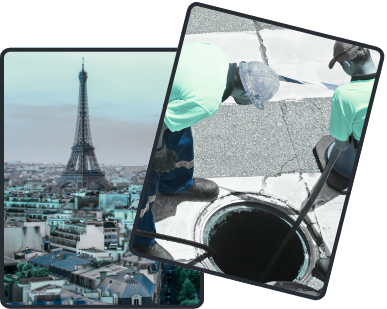
    Suez


    SmartShape for the digital transformation of the company

    • Customizing SmartShape According to Business Needs

    SmartShape can be customized to meet the specific needs of each business. Companies can choose features that best meet their requirements and adapt them according to their production process.

    • Improving Process Transparency with SmartShape

    SmartShape helps improve process transparency by providing real-time information on the production process. Teams can monitor the production process and have a complete view of all its stages.

    • Using SmartShape for Training and Skill Development

    SmartShape can be used for training and skill development. Teams can learn how to use SmartShape features and develop new skills to enhance their efficiency and productivity.

    • Easy Integration of SmartShape into Existing Systems

    SmartShape can be seamlessly integrated into existing systems, allowing companies to leverage their current investments while enhancing their efficiency and productivity. Companies can use SmartShape alongside their systems.

    In conclusion, SmartShape is a powerful tool for businesses looking to improve their productivity, efficiency, and competitiveness. With its key features such as decision support, real-time collaboration, live monitoring, and adaptability, SmartShape ensures efficient resource management and product quality improvement. Moreover, its easy customization and hassle-free integration into existing systems make it a wise choice for the digital transformation of any business.
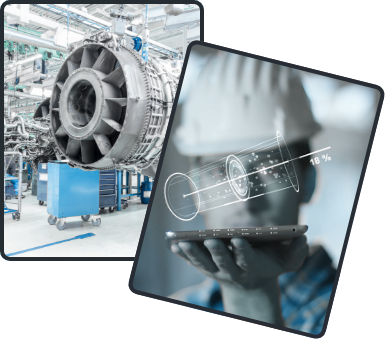
     

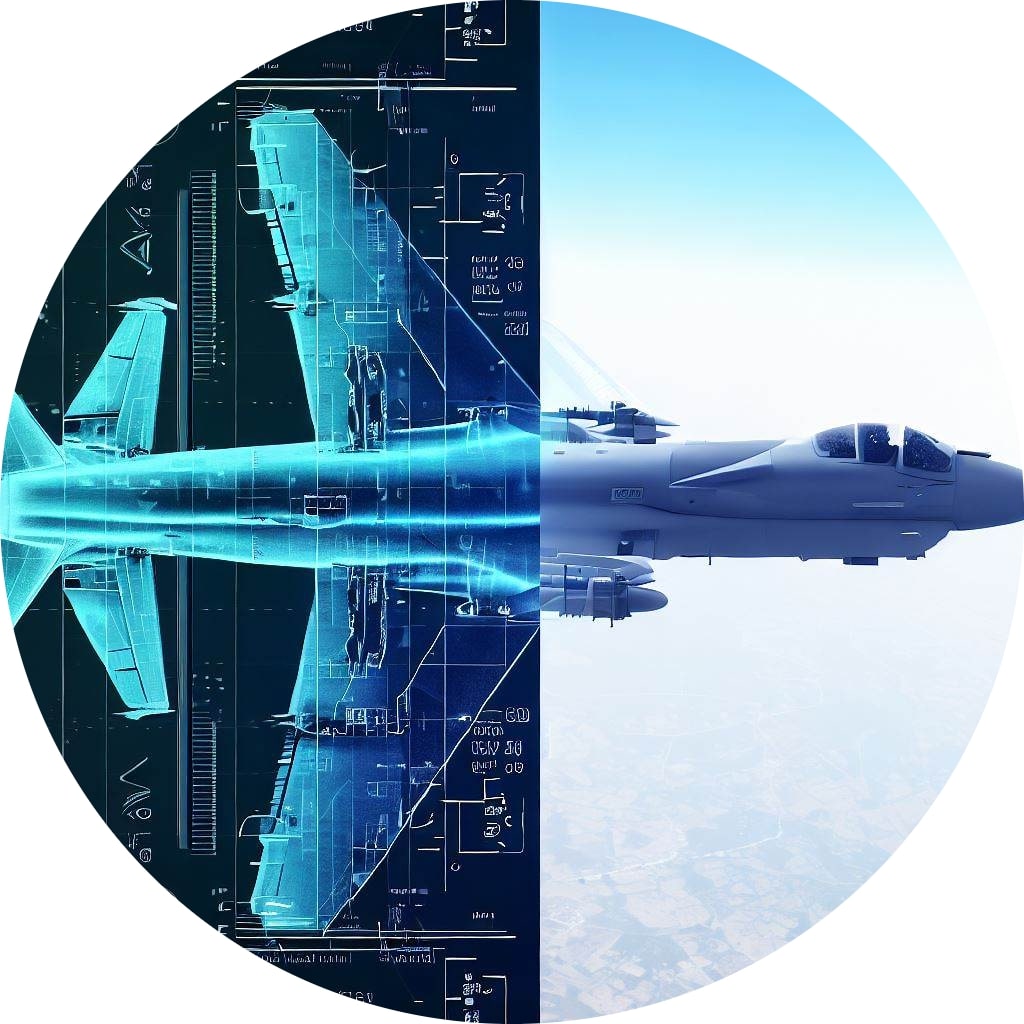
    Contatc_aero

  • The digital twin, a single source of truth

    The digital twin, a single source of truth

    The digital twin is a revolutionary technological innovation that has gained popularity in recent years. It represents an accurate virtual replica of an object, process, or real-world system. It is used in various industries to enhance productivity, operations management, and data-driven decisions. In this article, we will explore the concept of the digital twin as a single source of truth, focusing on its benefits, applications, and potential challenges.


    Introduction to the concept of the digital twin.

    In an increasingly data-driven world, the digital twin has become a powerful method for representing objects and systems from the real world in a virtual way. It is a comprehensive digital representation that combines real-time data, predictive models, and advanced analytics to create an accurate digital mirror of a physical object. This allows businesses to better understand, analyze, and optimize the performance of their real-world assets.


    Understanding the purpose of a digital twin.

    The primary objective of the digital twin is to provide a single and accurate source of truth about a given object or system. By creating a virtual replica of a physical asset, companies can monitor, simulate, and predict its behavior with high precision. This allows for better decision-making, optimization of operations, and cost reduction.


    The role of a digital twin as the sole source of truth.

    The digital twin acts as the single source of truth by consolidating all relevant data from a physical asset or system into one virtual model. This ensures that all stakeholders have access to the same accurate and up-to-date information. Decisions can therefore be made based on reliable and comprehensive data, avoiding the mistakes and misunderstandings that can arise from using multiple sources of information.


    Advantages of using a digital twin in various industries.

    The digital twin offers numerous benefits in various sectors of activity. It allows for improved productivity, cost reduction, and more informed decision-making. Let’s see how the digital twin is used in some specific industries.


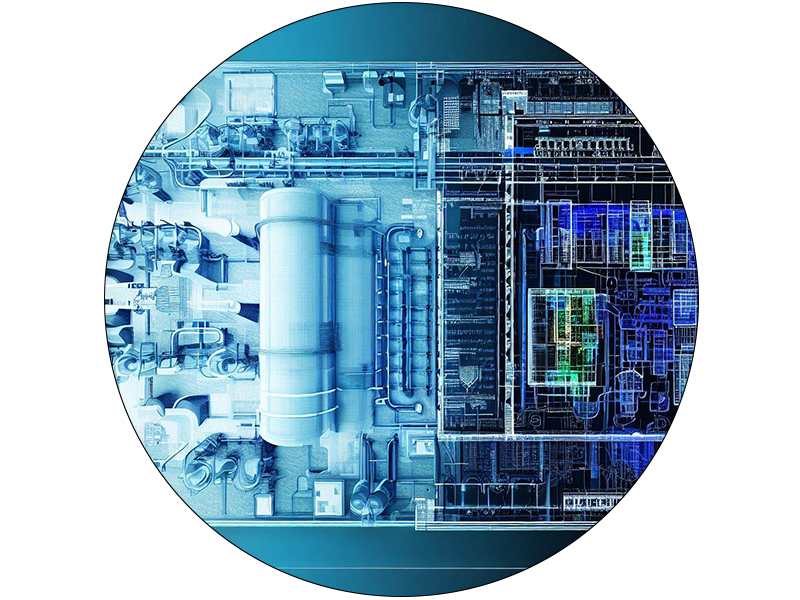
    Watter treatment 1


    Application of digital twin technology in the manufacturing sector.

    Improvement of productivity and efficiency.

    In the manufacturing sector, the digital twin can be used to optimize production chains, reduce downtime, and enhance overall efficiency. By using a digital twin, manufacturers can simulate and model production processes to identify bottlenecks, inefficiencies, and opportunities for improvement.

    Improvement of predictive maintenance

    Another key advantage of the digital twin in the manufacturing sector is the ability to implement predictive maintenance. Using sensors embedded in the actual equipment, the digital twin can monitor performance in real-time, detect impending failures, and recommend preventive maintenance actions. This helps to reduce unexpected downtime and optimize equipment lifespan.

    Streamlining of the supply chain management

    The digital twin can also be used to optimize supply chain management. By modeling and simulating product flows, businesses can identify inefficiencies, capacity issues, and potential risks. This allows for more accurate planning, improved inventory management, and better responsiveness to demand fluctuations.


    Use of the digital twin in the healthcare industry

    Amélioration des soins aux patients et des traitements

    In the field of healthcare, the digital twin can enhance patient care and treatments. By creating virtual models of patients based on medical data, doctors can simulate and test different medical interventions before applying them in the real world. This allows for personalized treatments, reduced risks, and an overall improvement in outcomes for patients.

    Optimization of health operations

    The digital twin can also be used to optimize hospital operations and resource management. By modeling patient flows, logistical processes, and resource usage, healthcare institutions can identify bottlenecks, reduce waiting times, and enhance overall efficiency. This leads to better resource utilization, cost reduction, and an improved patient experience.

    Impact of the digital twin on the development of smart cities

    Improvement of urban planning and infrastructure management

    In the context of smart city development, the digital twin plays a crucial role in urban planning and infrastructure management. By creating detailed virtual models of cities, authorities can simulate and evaluate the impact of various initiatives and projects. This allows for more efficient planning of transportation, energy, public services, and land use.

    Improvement of resource allocation and sustainability.

    The digital twin can also contribute to a more efficient use of resources and environmental sustainability. By modeling and simulating energy consumption, carbon emissions, and the use of natural resources, cities can identify opportunities for optimization and reduction of environmental impacts. This promotes sustainable development and the creation of greener and more resilient cities.

    Challenges and limitations of implementing digital twin technology

    Despite its many benefits, the implementation of the digital twin can also face challenges and limitations. Some of the main challenges include:

    Data security and privacy concerns

    With the collection and use of large amounts of sensitive data, data security and privacy become a major concern. It is essential to implement robust security measures to protect the data of digital twins from cyberattacks and unauthorized access.

    Integration and interoperability challenges

    In many cases, companies have to confront integration challenges when adopting the digital twin. It can be difficult to connect various systems, sensors, and platforms to get a comprehensive overview. Furthermore, interoperability between different digital twins used by various stakeholders can be a challenge to overcome.

    Future prospects and advancements in digital twin technology

    The digital twin continues to evolve and develop, paving the way for new perspectives and advancements. Here are some future trends and key developments to watch:

    Integration of artificial intelligence and machine learning

    The integration of artificial intelligence and machine learning into the digital twin will allow for more advanced analyses, more accurate predictions, and automated decisions. These technologies will enable digital twins to continuously learn and adapt, thereby enhancing their accuracy and usefulness.

    Expansion into new sectors and areas

    The potential of digital twins extends well beyond the manufacturing, health, and smart city sectors. We can expect new industries to adopt this technology to enhance their operations, productivity, and decision-making. Fields such as agriculture, energy, and transportation could also benefit from the use of digital twins.

    In conclusion, the digital twin is a singular source of valuable truth that offers numerous benefits across various industries. By enabling better understanding, accurate simulation, and decisions based on reliable data, it contributes to enhancing productivity, efficiency, and overall outcomes. However, challenges such as data security and interoperability need to be addressed to ensure successful implementation. With ongoing advancements in the field, the digital twin promises an exciting and innovative future.

    Watter treatment 3

    FAQs

    • What is the purpose of a digital twin?

    The primary objective of a digital twin is to virtually represent an object, process, or real-world system to allow for a better understanding, precise simulation, and decision-making based on reliable data.

    • How does the digital twin benefit the manufacturing sector?

    In the manufacturing sector, the digital twin enhances productivity, optimizes supply chain management, facilitates predictive maintenance, and allows for better optimization of production processes.

    • Can digital twin technology improve health outcomes?

    Yes, the digital twin can improve health outcomes by enabling personalized treatments, simulating medical interventions in advance, and optimizing hospital operations.

    • What are the challenges in implementing digital twin technology?

    Some of the challenges in implementing digital twin technology include data security, interoperability between different systems, and the need to collect and manage large amounts of data.

    • What is the future of digital twin technology?

    The digital twin will continue to evolve with the integration of artificial intelligence and machine learning, as well as its expansion into new industries and fields such as agriculture, energy, and transportation.

  • SmartShape: The Concept

    SmartShape: The Concept

    SmartShape le concept

    The “The intelligent form”

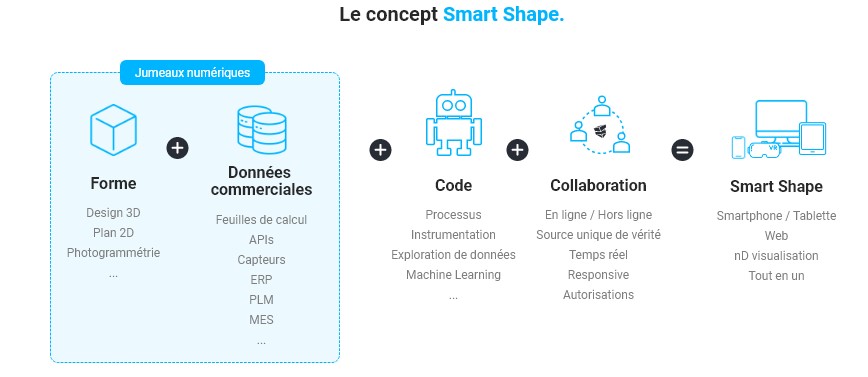
    A “smart shape” is an intelligent form that utilizes a combination of different technologies to create a comprehensive model. This approach includes the use of 3D mockups, 2D plans, photogrammetry, and business data such as spreadsheets, APIs, sensors, ERP, PLM, and MES. Moreover, the “smart shape” also integrates code such as processes, instrumentation, data mining, conversational artificial intelligence, and machine learning.

    The aim of this all-in-one, 360-degree, universal solution is to leverage existing data from a project without having to switch tools. By using a “smart shape”, professionals can have an overarching view of their project and all the associated data. This allows them to make more informed decisions and work more efficiently by using a single platform for all their data.


    The Form:

    •  SmartShape is an intelligent shape that can be used to integrate a variety of data formats, such as 2D, 3D, CAD, CADD, photogrammetry, and many others. It is compatible with all CAD software, such as Catia, SolidWorks, Revit, Microstation, as well as with all types of data sources or models, such as PLM, PDM, MES, spreadsheets, sensors, and more.
    • SmartShape is designed to be easily integrated into a wide range of systems and is available as an open API based on web standards, such as HTTP/2 and JSON. Moreover, it is easily accessible via any web browser, such as Firefox, Chrome, without the need for additional installation or download.
    • With SmartShape, professionals can seamlessly integrate different data sources and file formats into a single system. This allows users to work more efficiently, save time, and reduce errors related to data transfers between different systems. In addition, the open API of “SmartShape” allows users to customize their experience and adapt it according to their specific needs.


    Business Data:

    • SmartShape is capable of interfacing with various types of business data such as spreadsheets, APIs, sensors, ERP, PLM, MES, and more. This means that SmartShape can integrate the most common data in the design and production process, allowing users to have a comprehensive and accurate overview of their project.

    The Code

    • SmartShape is an all-in-one solution that facilitates the integration of various types of business data into the design and production process. With this capability, users can gain a comprehensive and accurate overview of their project by seamlessly incorporating data such as spreadsheets, APIs, sensors, ERP, PLM, MES, and much more.
    • Integrating these diverse data sources into SmartShape enables professionals to optimize their workflow and save time by eliminating the tedious tasks of data transfer between different systems. Moreover, this integration aids in making informed decisions by providing a complete overview of the data necessary for the design and production of a project.
    • SmartShape is a powerful tool for professionals looking to enhance their workflow by merging various business data sources into one system. This not only simplifies data management but also optimizes the design and production process, paving the way for more informed decision-making.


    The Collaboration

    • SmartShape is designed to foster collaboration among the various stakeholders involved in a project. Thanks to its features, users can work online or offline, with a single real-time source of truth, as well as a swift response. 
    • Furthermore, SmartShape allows for the management of access permissions and user profiles, ensuring optimal and secure collaboration among different project participants. 
    • By using SmartShape, users can easily work together and share information in real-time, without fear of losing data or working with outdated versions. This solution also enables them to save time and maximize their productivity by working in a collaborative and coordinated manner. 
    • SmartShape is an effective solution for facilitating smooth and productive collaboration between the various players in a project. It provides a singular working platform for all participants, thereby allowing for harmonious collaboration, streamlined communication, and optimization of work processes.


    The ‘smart shape’ :

    • SmartShape is an all-in-one, 360-degree, and universal solution that enables the creation of an intelligent shape based on the concept of an augmented digital twin. With its plethora of features, the SmartShape solution is accessible on smartphones, tablets, and the web. 
    • One of the key benefits of SmartShape is its ability to combat digital duplicates that result in the fragmentation of stagnant data and sequential silos. The SmartShape digital twin offers a singular source of truth, real-time processing, and a collaborative network. This means that professionals can work more efficiently and make more informed decisions by using a single platform for all their data.

    SmartShape is a solution that enhances the value of existing data in a project without the need to switch tools. It is compatible with all CAD software and every data source or model, making it extremely flexible and easy to incorporate into a wide variety of systems. By using SmartShape, professionals can gain an overarching view of their project and all associated data, allowing them to work more efficiently and make better-informed decisions.

    FAQ:

    Q: What is SmartShape? A: SmartShape is an all-in-one solution that facilitates the integration of various data sources to enhance collaboration and optimize workflow processes.

    Q: How does SmartShape aid in informed decision-making? A: By providing a comprehensive and accurate overview of a project through the integration of business data, SmartShape enables professionals to make more informed decisions.

    Q: What are the benefits of data integration with SmartShape? A: Integrating data with SmartShape allows for more efficient work, time-saving, and reduces errors associated with transferring data between different systems.

    Q: Which industries can benefit from SmartShape? A: SmartShape can be utilized across various industries such as naval, aerospace, energy, and infrastructure to enhance design and production processes.

    For any further inquiries or to contact us, please visit our Contact Us page.


  • What is a digital twin?

    What is a digital twin?

    What is a digital twin?

    À l’ère de la transformation numérique, de nouvelles technologies émergent et révolutionnent divers domaines de notre vie quotidienne. L’un de ces concepts passionnants est celui du “jumeau numérique”. Ce terme intrigue et suscite l’intérêt de nombreux experts en technologie et de professionnels de divers secteurs. Dans cet article, nous plongerons dans le monde du jumeau numérique, explorerons sa signification, ses applications et son potentiel, ainsi que son impact sur notre avenir. Préparez-vous à découvrir comment cette innovation prometteuse peut changer la façon dont nous concevons, construisons et interagissons avec le monde qui nous entoure.


    • What is a digital twin?

    The digital twin is an accurate virtual replica of a real-world object, system, or process. Essentially, it’s a real-time digital representation of a physical entity or complex system. The digital twin combines data from sensors, computer models, and real-time information to create a virtual simulation. This simulation is used to understand, monitor, optimize, and predict the behavior of the real object.

    • How does the digital twin work?

    To create a digital twin, several steps are necessary. First, data is collected using sensors placed on the physical object or using technologies such as 3D modeling or virtual reality. Then, this data is processed and used to generate a realistic computer model that accurately represents the real object. This model is continuously updated using real-time data from the real object, allowing precise synchronization between the digital twin and its real counterpart.


    • Applications of the digital twin :

    The digital twin finds applications in many sectors and industries. Here are a few examples:

    Manufacturing Industry

    In the field of manufacturing, the digital twin can be used to simulate production processes, optimize supply chains, conduct virtual tests, and enhance the overall efficiency of the factory. It also allows for the detection of potential problems before they actually occur, thus reducing downtime and associated costs.

    Healthcare Sector

    In the medical field, the digital twin can be used to simulate specific organs or body systems, allowing doctors to gain a better understanding of diseases, test potential treatments, and plan complex surgical interventions. It can also be used to monitor a patient’s condition in real-time, providing valuable information for personalized healthcare.

    Smart City

    The smart city concept relies on using the digital twin to model and optimize urban systems such as transportation management, energy consumption, urban planning, and waste management. By utilizing real-time data, decision-makers can make informed choices to enhance residents’ quality of life and environmental sustainability.


    • Benefits of the Digital Twin:


    The use of the digital twin offers numerous advantages:

    Informed Decision Making

    The digital twin provides accurate and real-time information about the actual object, allowing decision-makers to make informed decisions based on concrete data rather than assumptions.

    Cost and Time Reduction

    By simulating processes and scenarios before their actual implementation, the digital twin can reduce costs associated with errors and delays. It also allows for the optimization of operations, leading to efficiency and productivity gains.

    Accelerated Innovation

    The digital twin offers a secure environment to test new ideas, from virtual prototypes to new functionalities. This speeds up the innovation process by reducing risks and costs associated with trial and error.


    Watter treatment 2


    The digital twin is a powerful technological innovation that offers significant benefits in many fields. From manufacturing to healthcare, and smart cities, it enhances the understanding, optimization, and forecasting of real objects. By using accurate and real-time virtual representations, the digital twin allows us to make informed decisions, reduce costs and lead times, and accelerate the innovation process. As the world continues to digitize, the digital twin will play an increasingly important role in how we design, build, and interact with our environment.